What to Do When the Ship is Moving towards Sub Zero Temperature Area?

Ships plying in international waters have to travel to remotest areas of the world, irrespective of weather conditions and that too in limited amount of time. This makes the ship travel through sudden changes of climatic conditions, for e.g. a ship after passing through hot African Continent can enter freezing waters of Europe within few days.

Because of this, ship and its equipment also experience drastic temperature changes. Vessel equipments and machineries are installed with special systems so as to allow them to work in the harshest conditions. However, the operator, i.e. seafarers on board ship must take all the precautions especially when the ship is about to enter sub zero temperature regions.
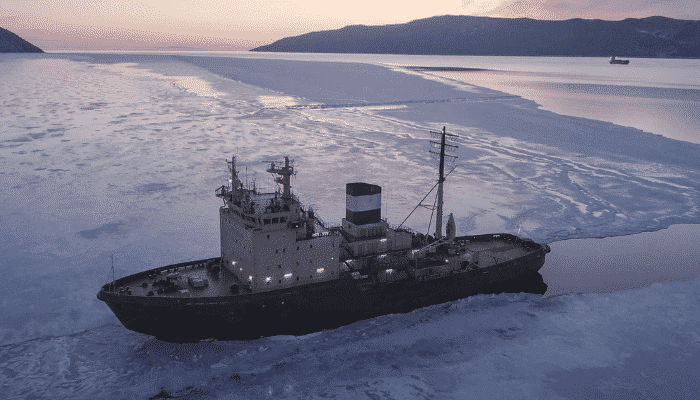
fennica icebreaker

Various precautions to be taken at deck and engine when the ship is about to enter sub zero temperature areas are:

Deck Precautions

  • The navigational information that is received by the bridge should be well analysed for safe navigation from ice
  • The navigation officer must recognise different types of sea ice forms
  • All the hydraulic machineries and winches to be operated to avoid freezing of oil.
  • All the heaters in the hydraulic system to be switched on.
  • Sounding to be taken at regular interval when plying in sub zero regions to identify any damage or leak from tank due to ice.
  • Start ballast sea chest heating, if required.
  • Lifeboat drinking water to be taken out and stored at desired place or a crew assigned to bring water during emergency.
  • Cold starting system of lifeboat to be kept ready.
  • Add anti freeze in jacket water of lifeboat engine.
  • All cargo line and other lines on deck must be fully drained after use.
  • PV breaker and deck seal in oil tanker to be added with antifreeze compound.
  • All greased equipment to be cleared off old grease and fresh anti freezing grease to be applied.
  • All the opening from deck to the accommodation must be kept close at all times.
  • Crew to be instructed to clear ice from deck equipments at regular intervals.

Engine room precautions

  • All cargo tank and fuel tank heating to be opened.
  • Take Soundings of all tanks prior to entering and after that in regular intervals.
  • Any steam coil not in use must be drained and drain kept open.
  • Sky light to be closed and ventilation to be reduced, to avoid cold air effect on control and gauging system.
  • Sea water circulation and temperature settings to be checked.
  • Sea chest heating to be opened.
  • Monitor all the pressure parameters in the engine room.
  • Open tracing steam where required.
  • Recirculate hot water in fresh water tank and its level to be kept below 90%.
  • Temperature in fuel oil tank to be maintained and level to be kept below 90%.
  • Lube and heavy oil purifier to be run continuously to maintain oil temperature.
  • Heaters in the engine room, CO2 room, bow thrusters room and steering room to be switched on.
  • Emergency fire p/p drains to be kept open with notice display.
  • All air lines in the engine room kept moisture free by frequent draining and control air drier to always run.
  • One generator to be kept standby in diesel oil.
  • Open heating sewage holding tank.
  • If power pack is provided, add antifreeze and take all cold weather precaution as given by maker.

 Personal Precaution

  • Safe working condition to be explained to the crew.
  • Hypothermia and cold burn and their precaution to be understood.
  • Limit exposure time for outside work.
  • Adequate warm clothing and eye protection for snow blindness.
  • Crew to take care of their room temperature by switching on heaters and closing port holes at all times.

References: dnv

Leave a Reply

Latest Article

Discount up to 30% for this month

Lorem ipsum dolor sit amet consectetur adipiscing elit dolor