
Every maritime professional at some point in their career thinks of doing something else apart from sailing. If you are a seafarer, you know what we are talking about. You also know that settling with an onshore job after years of sailing is easily said than done. However, fear of uncertainties shouldn’t be a reason for your to give up on your dreams of taking up something new. Several maritime professionals have successfully quit sea life and settled onshore.
There are several opportunities in the maritime industry apart from sailing if you have the right certification and experience. Some of these jobs are quite similar to that of sailing but requires lesser number of days at sea. One such job is that of SIRE Vetting Inspector.
If you have worked on tanker ships or are remotely associated with them, then you would know about the highly challenging ship inspections known as SIRE Inspections. These inspections are normally conducted by an inspector called the SIRE Vetting Inspector.
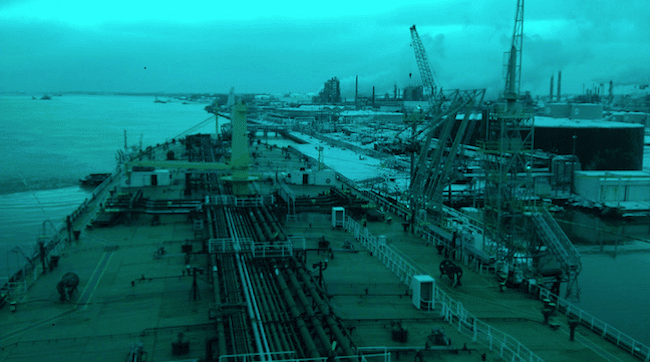
Just like the jobs of surveyors and superintendent, the profile of a SIRE Vetting Inspector is also a highly rewarding. No doubt it involves traveling and can turn out to be highly stressful, but the career is surely a respectable and lucrative one.
What is SIRE?
SIRE stands for Ship Inspection Report Program, which was introduced by the OCIMF ( Oil Companies International Marine Forum) in 1993 as a safety initiative to address concerns about sub-standard shipping. The SIRE Program is a unique Tanker Risk Assessment tool which is of great value to Charterers, Ship Operators, Terminal Operators and Government bodies concerned with ship safety. It consists of a large pool of up-to-date information about Tankers and Barges.
What do SIRE Vetting Inspectors Do?
SIRE vetting inspectors are required to report on vessels or operational deficiencies, to detail both positive and negative comments on the vessel’s operation. They then make reports with the found deficiencies (rating them from High to Low risks) and give it to the vessel master at the end of every inspection. Vessels with “High risks” cannot be used until all observations have been closed out.
What is OCIMF?
The mission of OCIMF ( Oil Companies International Marine Forum) is to be the foremost authority to ensure safe and environmentally responsible operation of Oil Tankers, Terminals and Offshore Support Vessels, promoting continuous improvement in standards of design and operation.
Ship Inspector Training and Accreditation Procedures
SIRE Inspectors are mainly divided into 3 categories. They are as follows:
Category 1: Oil, Chemical and Gas Carriers plus vessels listed under Category 2 and 3.
Category2: Small Oil Tankers of less than 5000 tons dwt and Chemical Tankers and Gas Carriers of less than 500 Tons Gross Tonnage plus vessels listed under Category 3.
Category 3: Barges together with Tugs that are associated with movement of barges, and also vessels that are used for carriage of packaged cargoes.
Guidelines/ Requirements For Becoming a Successful SIRE Vetting Inspector
All prospective Inspectors must, in first instance, apply to be an OCIMF member to undertake a necessary training leading to an examination and accreditation. Only OCIMF members are eligible to nominate an applicant for accreditation. Once an applicant is approved, OCIMF will arrange for the applicant to attend an approved SIRE Inspector Training Course and sit for the examination at an OCIMF designated examination centre.
It is to note that employees of vessel operators are not eligible to attain SIRE Inspector Accreditation.
Category 1 Inspectors: Must hold or have held a valid Master’s/Chief Engineer’s License from recognized Flag State for vessel’s of 3000 GT/ 3000 KW or more. Must have at least 5 years actual sea service aboard tankers of which not less than 2 years must have been senior officer on board a tanker and shall hold or have held Certificate of Advanced Training appropriate to the type of Vessel to be inspected or proof of satisfactory training under STCW Convention/Code, with a valid OCIMF Ship Inspector Training and Accreditation program.
Category 2 Inspectors: Must hold or have held a valid Master’s/Chief Engineer’s License from recognized Flag State for vessel’s between 500 and 3000 GT/750 and 3000 KW Propulsion Power.
The work experience and other certification remains same as listed above for Category 1 Inspectors.
Category 3 Inspectors: Must hold or have held Certificate of Competency as Master or Officer In charge of navigation watch of ships less than 500 Gross tonnage issued by recognized Flag State Or
Certificate of Competency as Second Engineer issued by recognized Flag State Or
Nationally recognized Barge Master’s License Or
Nationally recognized Barge Chief Engineer’s License Or
Extensive day-to-day experience in Barge Operations or Barge Terminal Management
Must have served at least 2 years on the type of vessel to be inspected or have undergone suitable training to inspect Category 3 Vessels with Certificate of Advanced Training appropriate to the type of Vessel to be Inspected, Or a certificate issued by Local Authority of Equivalent standard.
The training of all these Inspectors is carried out in UK with SIRE Courses and Examinations. The applicants are exposed to various topics of International and Industry Structures, IMO, Vetting, OCIMF, SIRE, Accessing the SIRE website and Downloading Reports, The conduct of an Inspection and use of VIQ/ROVIQ and its questions and explanation of the features and use of SIRE VIQ software. Additional training is carried out for those Inspectors willing to inspect Chemical/Gas carriers.
All applicants are required to pass a written General Examination at the end of training Course and undertake on-board training in form of accompanied inspections and finally, successfully undertake an on-board Audit in presence of SIRE Accredited Auditing Inspector.
Knowledge and Capability of above listed Inspectors:
SIRE Inspectors must be able to demonstrate familiarity and knowledge of International Guidelines, Codes and Conventions with various Regulations, Procedures and Standards appropriate to the type of vessel being inspected (SOLAS,ISM,ISGOTT,STCW,ICS,OCIMF).
They should be proficient in English and be physically fit to carry out the Inspection of Vessel. The inspector should also be warm and behave ethically and co-operate with the Ship Staff. This post is highly demanding and needs planning at a very early stage in ones career. It also involves a lots of hard work and dedication.
People sailing on Tankers (Oil/Gas/Chemical) or those who wants to become SIRE Vetting Inspector must start building contacts in the industry and keep healthy relationship with these inspectors who visit their vessel at the time of Inspection. You can also take their details and get in touch with them if required as many of them are more than happy to help.
Are you a SIRE vetting Inspector or do you know one? Are we missing any important information? Do let us know in the comments below or at info@marineinsight.com.