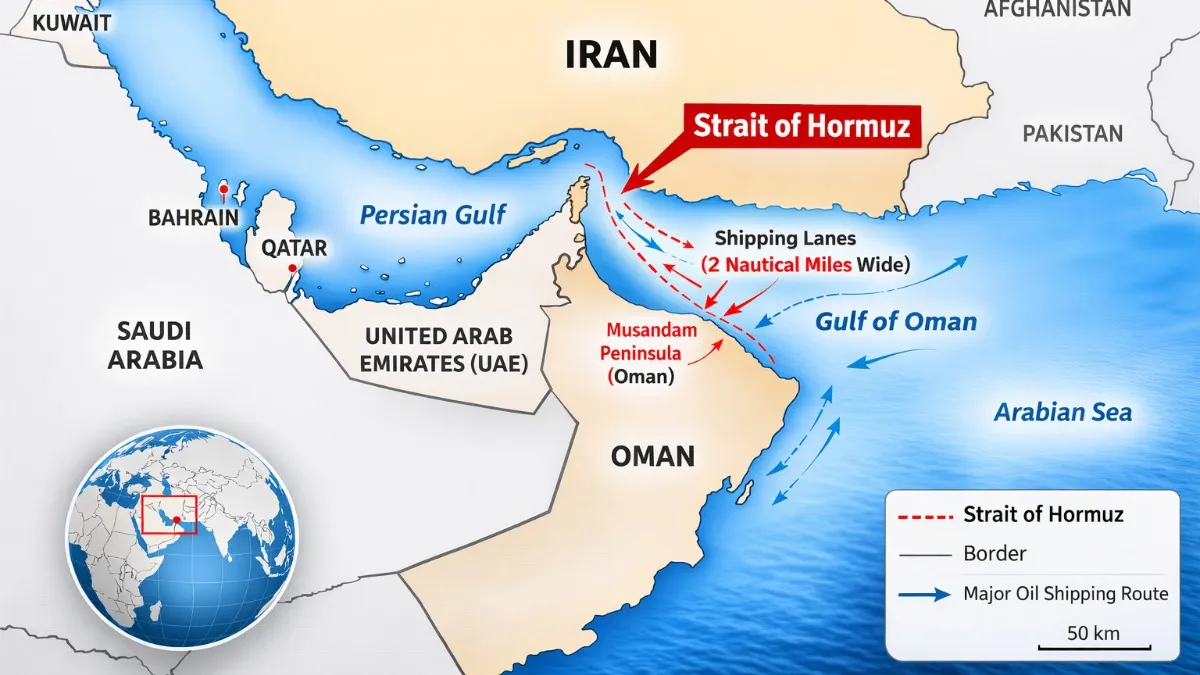

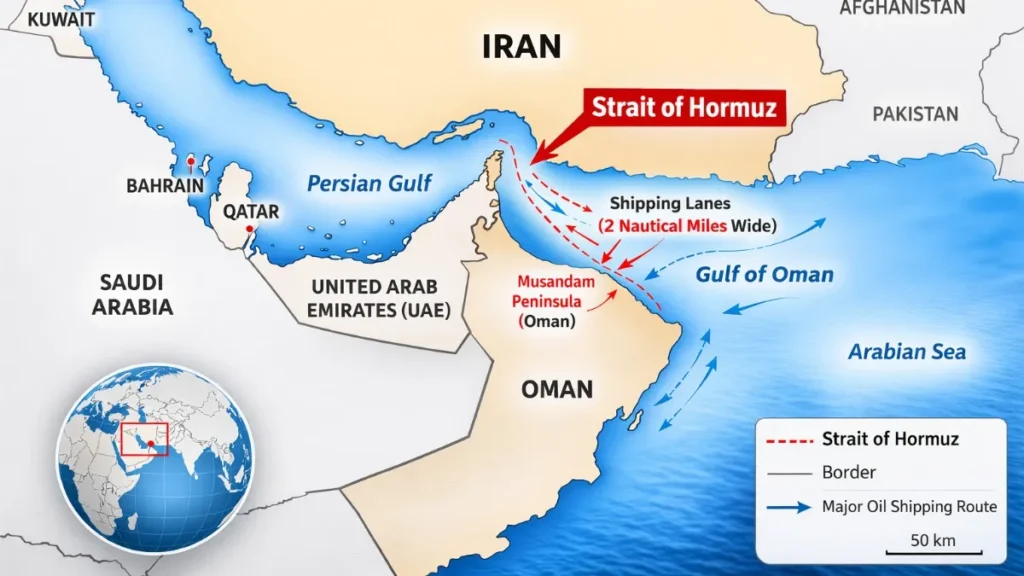
As tensions between the United States and Iran continue to escalate, the Strait of Hormuz—one of the world’s most critical maritime chokepoints—has become the epicenter of a deepening crisis. What began as a joint US-Israeli military operation on February 28 has evolved into a prolonged standoff, with Iran effectively blockading the strategic waterway and leaving thousands of seafarers stranded amid rising fears of a wider war.
Military Escalation in the Gulf
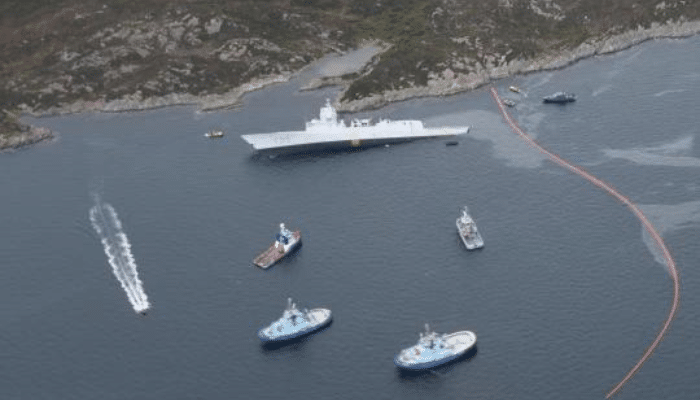
The past week has seen a sharp uptick in military confrontations near the Strait of Hormuz. On April 3, Iran’s Islamic Revolutionary Guard Corps (IRGC) claimed to have downed a US A-10 aircraft in the vicinity of the strait, a report that the Pentagon swiftly rejected. “All US fighter aircraft are accounted for,” US Central Command stated, noting that the IRGC “has made the same false claim at least half a dozen times”. Despite the denial, Tehran celebrated the alleged downing of two US warplanes, with Iranian media broadcasting images of wreckage and ongoing search operations.
The confrontation is not limited to the air. On March 20, US and allied forces intensified efforts to reopen the strait, using A-10 aircraft and Apache helicopters to destroy Iranian fast boats that had been pursuing commercial shipping. Yet Iran has shown little sign of backing down. The IRGC Navy has repeatedly declared the strait closed, warning of a “harsh response” to any unauthorized movement.
The Blockade: Ships Stranded, Seafarers Suffering
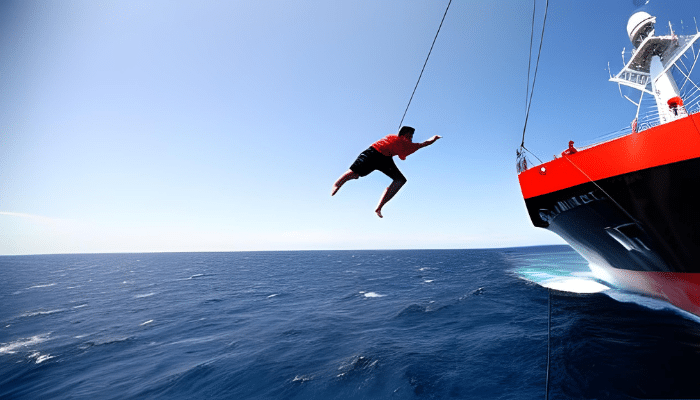
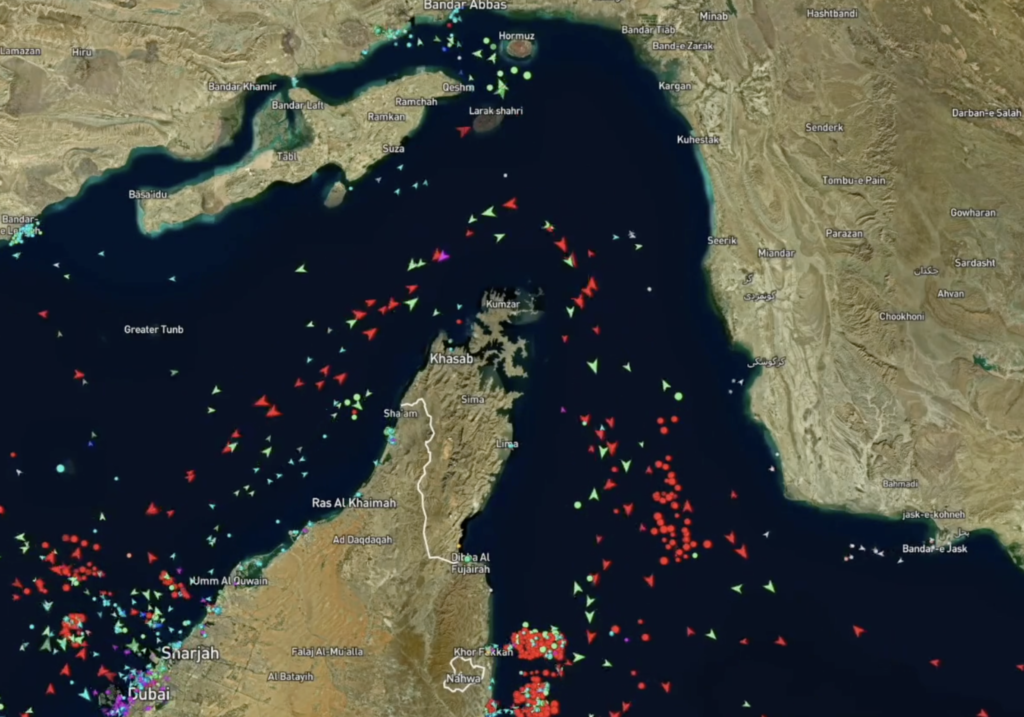
The most visible consequence of the standoff is the massive buildup of vessels unable to pass through the strait. According to the International Maritime Organization (IMO), nearly 20,000 seafarers remain stranded aboard ships in and around the Strait of Hormuz—a situation the UN body has described as “unprecedented in the post-Second World War era”.
First-hand accounts paint a grim picture. Chinese sailor Liu Yiwen, whose liquefied petroleum gas carrier has been anchored off the UAE’s Port of Khor Fakkan since late February, described how GPS signals were jammed, VHF radios broadcast constant distress calls, and fighter jets circle overhead daily. Food and water supplies are running dangerously low; Liu reported that the price of a box of bottled water had jumped from just over $1 to $14, and that fresh produce had long since run out.
The human toll continues to mount. The IMO has recorded 19 attacks on vessels in the strait since the conflict began, with 10 seafarers killed and eight injured. In one particularly tragic incident, human remains were found aboard the Thai-flagged cargo ship Mayuree Naree, which was struck by Iranian forces in March while attempting to transit the strait.
Economic Shockwaves: Oil Prices and Insurance Premiums Soar
The disruption has sent shockwaves through global energy markets. Brent crude prices have surged above $118 per barrel—a 50% increase since the escalation began. The International Energy Agency has described the situation as “creating the largest supply disruption in the history of the global oil market”.
Maritime insurance costs have followed a similar trajectory. War risk premiums, which previously cost less than 1% of a vessel’s hull value, have skyrocketed to between 3.5% and 10%—or tens of millions of dollars for a single transit through the strait. Shipping costs have surged twelvefold, threatening to push global trade into what some analysts are calling the “most expensive” shipping season on record.
International Reactions and Diplomatic Efforts
The crisis has drawn sharp responses from world powers. China has blamed the “illegal” US-Israeli military operation as the root cause of the disruption, urging de-escalation to safeguard global shipping. Russia’s Foreign Minister Sergey Lavrov argued that the US must cease hostilities rather than simply demand that Iran unblock the strait, stating that shipping would resume normally as soon as military operations end.
Meanwhile, US President Donald Trump has publicly expressed confidence that the strait can be reopened, posting on Truth Social that “with a little more time, we can easily OPEN THE HORMUZ STRAIT, TAKE THE OIL, & MAKE A FORTUNE”. However, analysts warn that any military attempt to forcibly reopen the waterway would be complex and costly, given the narrow shipping lanes and Iran’s arsenal of naval mines and anti-ship missiles.
Behind the scenes, diplomatic efforts continue. Iran has granted passage to vessels from countries it considers friendly—including Russia, India, China, Pakistan, and Japan—while continuing to block ships affiliated with the US, Israel, and the UK. Oman is reportedly working with Tehran to draft a peacetime protocol that would supervise maritime traffic through the strait, though details remain unclear.
What Lies Ahead?
US intelligence assessments suggest that Iran is unlikely to reopen the Strait of Hormuz in the near future, viewing its control over the vital waterway as its most effective leverage against Washington. Some analysts fear that the conflict may have handed Tehran a “weapon of mass disruption” more potent than any nuclear arsenal.
For the nearly 20,000 stranded seafarers, however, the immediate concern is far more urgent: food, water, and safe passage home. The IMO has called on all parties to de-escalate and establish safe maritime corridors to evacuate crews. Whether those calls will be heeded remains to be seen.
—
This article is based on publicly available information from multiple sources and is provided for informational purposes only