
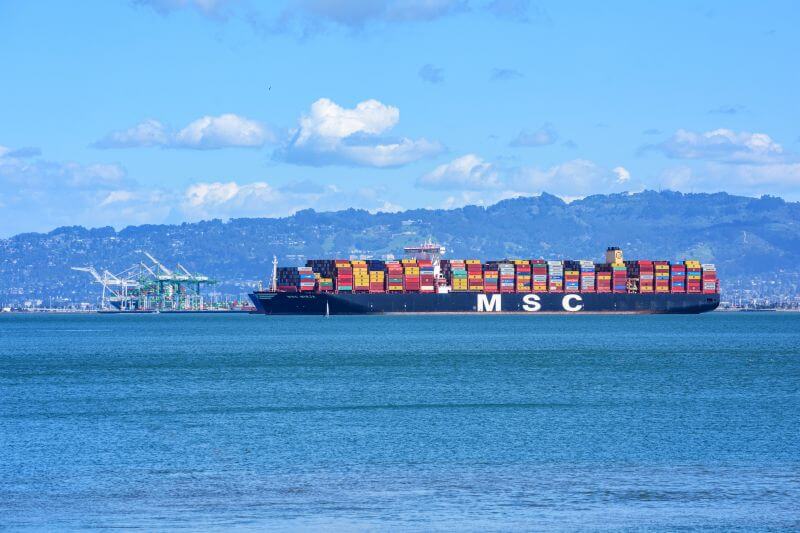
Danish shipping giant Maersk floated atop maritime movers in container capacity for decades. But today, it is has been surpassed by MSC, as the world’s largest shipping line.
New data published on Wednesday reflects that the Swiss-Italian Mediterranean Shipping Company has risen to the top. The firm’s fleet includes nearly 2,000 more 20-foot containers than its competitor, for 4.3 million for stevedores to unload ships across the globe. But Maersk — or let’s say, at least some individuals at the enterprise — say it is not bad.
Supply chain challenges and bottlenecks have enhanced shipping earnings over 2020 and 2021. It may come to mind that firms are duking it to own the sector. But the honchos at Maersk, including Soren Skou, the CEO, seem to consider that being the greatest does not always mean being the best. They are emphasizing land-based logistics, where the profits margin is significantly higher.
But a thing they may have forgotten is how their employees take the firm’s core business. When an IT executive suggested that Maerks was a technology major with a few physical devices that enables it to move about, the ship hit the fan:
Maersk-Mediterranean Relationship
While Maersk ceded pole position to Geneva-based Mediterranean Shipping, the two share a tight bond — even though in 2020 Mediterranean poached Soren Toft, its CEO, from Maersk. The two companies are in a vessel-sharing collaboration. They also share an intuitive blockchain-based platform that generates shipping information.
Even though Maersk is no more the largest freight hauler, it witnessed the most profitable quarter toward December end. It was all prepared to make a record for the maximum full-year profit reported by any Danish enterprise ever before — matching cumulative profits over nine years at over $16 billion.
Reference: fool.com